Introduction to Trail Signage and Wayfinding
A beautiful trail can still fail its visitors. Every year, hikers wander off-route, twist an ankle on unmarked terrain, or drift into closed habitat, not because the landscape is dangerous, but because nobody told them where to go.
A successful trail experience depends on more than scenery. It depends on a navigation system visitors can trust from the trailhead to the summit and back.
That system is called wayfinding, and it's far more than a collection of signs. It's a coordinated strategy of identification, direction, information, and regulation, all working together to guide and protect every visitor who steps onto the path.
This guide breaks down what park managers, trail builders, and sign professionals need to build a trail signage system that's safe, accessible, and built to last.
Key Takeaways
- Trail signage reduces risk, builds hiker confidence, and keeps visitors on designated paths
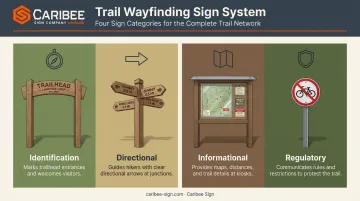
- Complete wayfinding relies on four sign types: identification, directional, informational, and regulatory
- Readability, consistent placement, and durable materials determine whether a sign works
- ADA compliance protects visitors with disabilities and keeps outdoor spaces legally sound
- The right substrate matters as much as the message printed on it
Why Effective Trail Signage is a Non-Negotiable Safety and Experience Tool
Preventing Hazards Before They Happen
Clear directional signage stops visitors from wandering into terrain they weren't prepared for. Well-placed signs warn hikers about steep drop-offs, wildlife activity, and stream crossings before they become emergencies. Mile markers and reassurance signs also give rescue teams a fixed reference point, which matters when someone needs help fast.
Visitor satisfaction data reflects how much this matters to the people using the trail. The U.S. Forest Service's 2020 National Visitor Use Monitoring report tracked service satisfaction, including signage adequacy, information, and staff helpfulness:
- 87.0% satisfaction at developed sites
- 78.3% satisfaction in general forest areas
- 79.8% satisfaction in designated wilderness
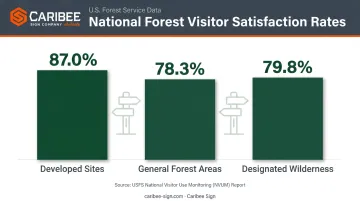
Signage isn't the only factor in those numbers, but it's a documented piece of the visitor experience puzzle.
Building Confidence, Not Anxiety
A novice hiker who isn't sure where the trail splits will hesitate, backtrack, or simply turn around. Consistent signage removes that guesswork. It lets people focus on the scenery instead of second-guessing every fork in the path.
Protecting the Land Along the Way
Signage does double duty as a conservation tool. Regulatory and directional signs that clearly mark designated paths:
- Keep foot traffic off fragile vegetation and eroding slopes
- Direct visitors around sensitive wildlife habitat and nesting areas
- Reinforce "stay on trail" messaging at the exact point where people might wander
The Four Pillars of Trail Wayfinding: Essential Sign Types
A complete wayfinding system rests on four functional sign categories. Each one answers a different visitor question, and together they cover the entire journey.
1. Identification Signs: Establishing a Sense of Place
These signs tell visitors where they are. Trailhead entrance signs announce the start of a route, landmark identifiers mark features like a "Scenic Overlook," and facility signs point toward restrooms or parking. They also carry branding, giving a trail system a consistent, recognizable identity.
2. Directional Signs: Guiding Visitors Along the Path
Directional signs keep hikers moving in the right direction. Common formats include:
- Trail blazes and markers painted or affixed to trees and posts
- Fingerposts at intersections, pointing toward different routes and destinations
- Mile markers that show progress and help with emergency location
USFS guidance also calls for reassurance markers wherever the tread is hard to follow, a small detail that prevents a lot of confusion in dense forest or rocky terrain.
3. Informational & Interpretive Signs: Enriching the Journey
These signs add context. Kiosk maps orient visitors before they start walking. Interpretive panels explain local flora, fauna, or the historical significance of a site. This category turns a walk into a richer experience by adding meaning to the landscape.
4. Regulatory Signs: Setting Rules and Managing Use
Regulatory signs communicate what's allowed and what isn't. Typical examples include:
- "No Bicycles" or "No Motorized Vehicles"
- "Pack It In, Pack It Out"
- "Leash Pets at All Times"
- Trail closure or hazardous condition warnings
For shared-use paths that fall under traffic-control jurisdiction, the MUTCD governs sign format and placement. Not every foot trail qualifies as a MUTCD-covered facility, so confirm applicability before designing to that standard.
Designing for Impact: Key Principles of Effective Trail Signage
Readability and Comprehension
A sign that can't be read fast isn't doing its job. Effective trail signs use:
- High-contrast, non-glare color combinations
- Clean sans-serif fonts sized for the expected viewing distance
- Universally recognized icons and symbols that work regardless of language
The 2010 ADA Standards, Section 703.5 require non-glare finishes and light-on-dark or dark-on-light contrast for visual characters, along with a conventional typeface, not italic, script, or overly decorative lettering. No numeric contrast percentage is specified in the standard, so don't rely on a claimed "70% contrast rule."
Strategic Placement and Consistency
Signs work best at decision points, meaning trailheads, junctions, and anywhere the tread becomes ambiguous. The National Park Service's wayside exhibit guidance places orientation signs along the natural pedestrian flow, right where a visitor decides whether or where to explore next.
Consistency matters just as much as location. When signs sit at the same height and orientation trail-wide, visitors learn where to look without thinking about it.
Signage colors, logos, and materials should also reflect the trail system's identity while blending into the surrounding landscape. A sign that clashes visually with its environment distracts from the experience it's meant to support.
Accessibility and ADA Compliance
Making a trail accessible starts with the signage itself. Key elements include:
- Non-glare finishes on all visual characters
- Adequate light-on-dark or dark-on-light contrast
- Mounting heights and character sizing that work for seated users and standard sightlines
Getting these details right on every sign, across every trailhead, is where a lot of projects run into trouble. Sign companies handling trail signage projects often partner with a wholesale manufacturer that specializes in ADA compliance, such as Caribee Sign, to take that burden off their production process. The right manufacturing partner confirms every regulatory box gets checked before signs ship out to the trail.
Material Matters: Choosing Durable and Appropriate Signage for the Outdoors
The material behind a trail sign determines whether it survives one season or twenty. Several material types dominate outdoor trail applications:
- Metal (aluminum): Resists rust and corrosion, staying rigid and legible for years — well suited for regulatory and directional signs.
- High-Pressure Laminate (HPL): Resists UV fading and vandalism, making it a strong choice for full-color interpretive panels and trail maps; check manufacturer warranty terms before specifying.
- Wood: Blends naturally into rustic settings but requires regular sealing to resist weathering.
- Recycled plastic: Also blends naturally into outdoor settings and resists rot and insect damage with minimal upkeep.

Match the material to the sign's job. A trailhead map faces different wear than a post-mounted mile marker, and the substrate should reflect that.
Partner with Caribee Sign for a Compliant and Cohesive Trail Signage System
A trail wayfinding system succeeds when it combines a clear plan, well-designed signs, durable materials, and consistent ADA compliance. Getting all four right, across dozens or hundreds of sign locations, is a manufacturing challenge as much as a design one.
Caribee Sign has spent 60+ years manufacturing custom, ADA-compliant signage for sign companies and trade professionals nationwide, entirely in-house from its St. Louis, MO facility. That in-house control, using CNC routing, laser engraving, and precision fabrication, means:
- Consistent quality across large, multi-site sign orders
- Fast quote turnaround, typically within one business day
- Dependable lead times partners can plan installations around
Hugh Welch of Hugh-Carolina Sign Co. calls Caribee his "go-to company" for ADA signage needs. He describes the team as "super responsive" and easy to work with, the kind of dependable partner a trail signage project needs behind the scenes.
If you're a sign professional building out a park or trail wayfinding project, Caribee's team can talk through material options, custom branding, and compliance details before production starts.
Frequently Asked Questions
What is trail signage?
Trail signage is the system of signs, markers, and maps used to guide, inform, and protect visitors on outdoor trails. It covers everything from trailhead entrance signs to mile markers and rule postings.
What are the 4 types of wayfinding?
The four main types are identification (trailhead signs), directional (arrows, fingerposts, mile markers), informational (maps, interpretive panels), and regulatory (rules, closures, warnings). Skipping any one type creates gaps that leave visitors guessing at critical points on the trail.
What makes a trail sign ADA-compliant?
ADA-compliant trail signs use non-glare finishes, adequate light-on-dark or dark-on-light contrast, and appropriately sized visual characters. Tactile elements and specific mounting heights apply mainly to signs identifying permanent rooms or spaces, not every outdoor directional sign.
What are the most durable materials for outdoor trail signs?
Powder-coated aluminum holds up well for regulatory and directional signs, while High-Pressure Laminate resists UV fading and vandalism for full-color maps and interpretive panels. Wood and recycled plastic work well for posts, provided wood receives regular maintenance.
How high should trail signs be placed?
Placement should stay consistent across a trail system so visitors know where to look. There's no single universal outdoor mounting height, so base sign height on the specific sign's function, the land manager's guidelines, and applicable accessibility standards.